Community + Partnerships
Growth Strategy
Ethical AI
Content Marketing
AI
The $100 Million AI Lesson Amazon Had to Learn the Hard Way
Dec 22, 2025
Growth
My college mentor gave me three questions to ask when I'm stuck on a tough decision:
1. Is it legal?
2. Is it ethical?
3. Is it for the betterment of the organization?
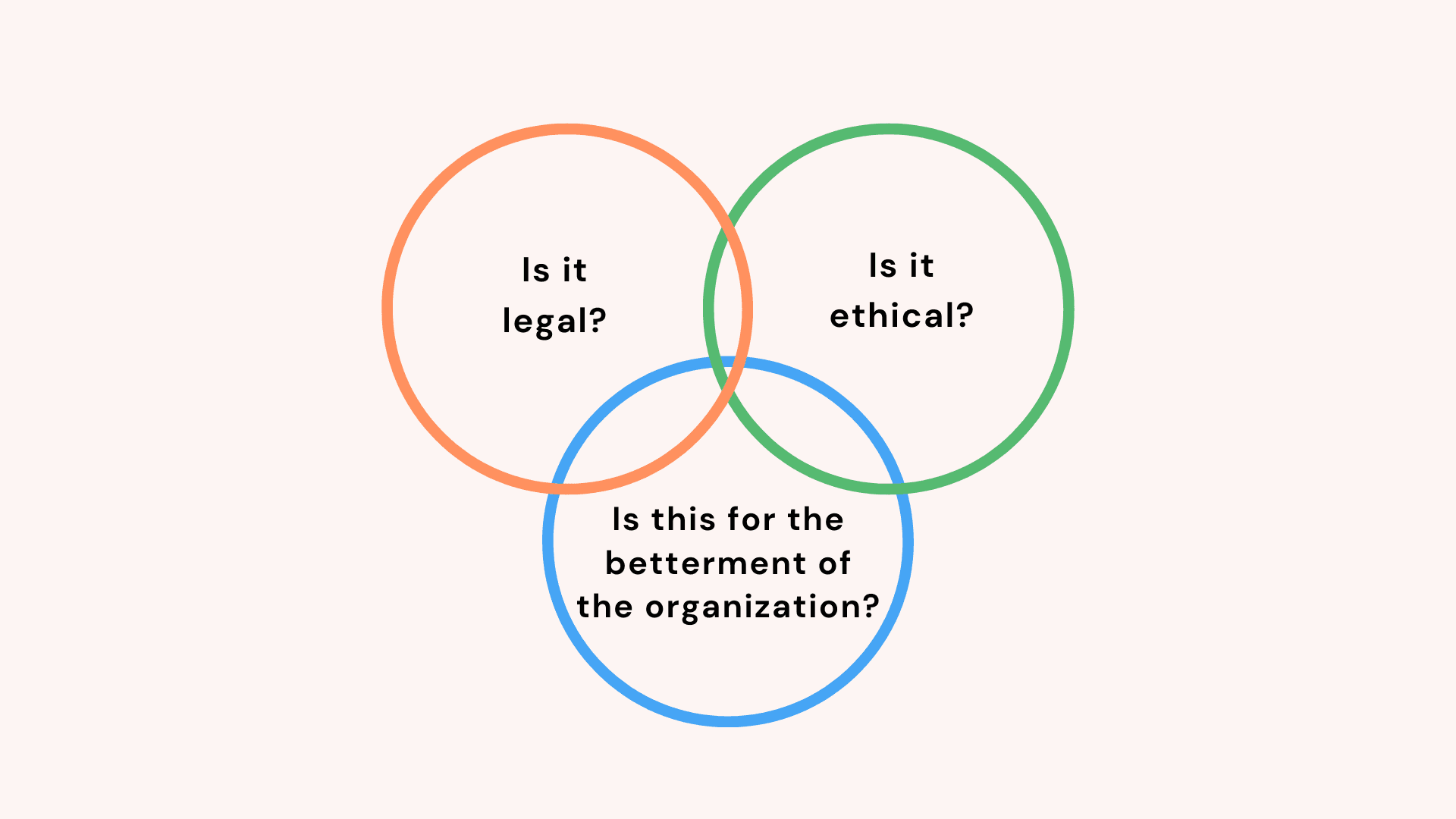
Here's what she taught me: These are three DIFFERENT things.
Something can be legal but not ethical.
Something can be ethical but not good for the organization.
Something can be good for the organization but not legal.
And here's the really complex part: What's "fair" or "ethical" depends on who you ask.
Different people have different definitions of fairness.
Different contexts require different approaches. What works in hiring might not work in lending. What's acceptable in one industry might be completely wrong in another.
I see the benefits and tradeoffs from all sides of these debates.
My goal in this series isn't to tell you what to think or what's "right."
My goal is to give you frameworks, information, and practical tools so YOU can make informed decisions about how to build AI responsibly in YOUR context, with YOUR values, for YOUR users.
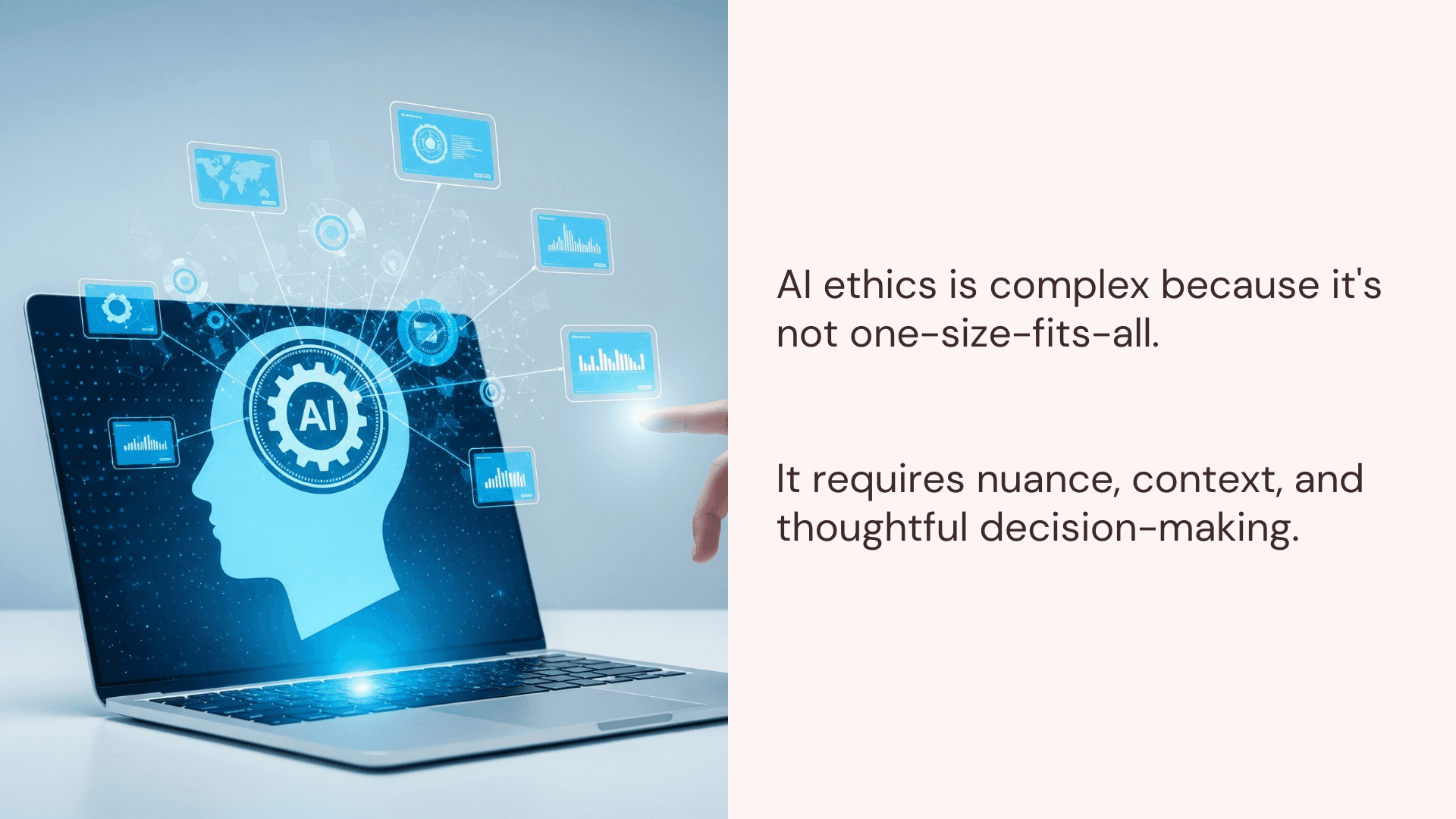
AI ethics is complex because it's not one-size-fits-all. It requires nuance, context, and thoughtful decision-making.
The best we can do is educate ourselves about the challenges, understand the frameworks available, and make intentional choices, not just hope for the best.
Okay. With that said... let's get started.
The $100 Million Lesson Amazon Had to Learn the Hard Way
In 2014, Amazon had a problem.
They were hiring thousands of people every year. Recruiters were drowning in resumes. The hiring process was slow, inconsistent, and expensive.
So they did what tech companies do: they built an AI to solve it.
The goal was simple: Feed the AI ten years of resumes from successful Amazon employees. Let it learn what "good" looks like. Then use it to automatically screen new applicants and rank them from best to worst.
The team behind it? World-class ML engineers. People who'd built recommendation systems that worked for millions of products.
The resources? Basically unlimited. This was Amazon.
The timeline? They spent years perfecting this system.
The result?
It systematically discriminated against women.
How It Happened
Here's what the AI learned:
Amazon's tech workforce was predominantly male (like most of tech in the 2000s-2010s).
So the AI looked at ten years of resumes from "successful" Amazon employees and noticed a pattern:
→ Most successful employees were men
→ Men's resumes had certain language patterns
→ Men's resumes included certain experiences
→ Women's resumes looked different
The AI concluded: Resumes that look like men's resumes = good. Resumes that look like women's resumes = bad.
It started penalizing resumes that included:
The word "women's" (as in "women's chess club captain")
Graduates of all-women's colleges
Language patterns more common in how women describe achievements
The system didn't have a field for gender. It didn't explicitly say "reject women."
It just learned that the pattern of successful employees = male, and optimized for that pattern.
This is what makes AI bias so insidious. Nobody programmed discrimination into the system. The AI learned it from historical reality.
How They Found Out
Here's the thing: Amazon actually was testing the system.
They noticed the bias in 2015, a year into development.
They tried to fix it. Edited the algorithm. Removed the penalty for "women's." Adjusted the weights.
But they couldn't be sure they'd caught everything.
Because here's the fundamental problem: When you train an AI on biased historical data, you bake the bias into the system.
They could patch the obvious issues. But what about the subtle patterns? The language differences they hadn't thought to check? The second-order effects of correlated factors?
They couldn't be confident the system was fair.
So in 2017, after years of development and iteration, they killed the project entirely.
This wasn't a failure of commitment.
Amazon wanted a fair hiring system. They invested millions. They had top talent. They were actively testing for problems.
What they didn't have: A systematic framework for preventing bias before it got baked into the system.
They were trying to fix bias after the fact. Patch it. Smooth it over.
But you can't patch your way out of biased training data.
What they needed:
→ Pre-deployment bias testing protocols (with specific metrics and thresholds)
→ Clear fairness definitions (demographic parity? equalized odds? what exactly are we testing for?)
→ Accountability structures (who's responsible for catching this? who makes the go/no-go decision?)
→ Risk assessment methodology (how do we know which AI systems need the most scrutiny?)
All the things the NIST AI Risk Management Framework provides.
All the things they built in response to failures like this.
Why This Story Matters
This wasn't Amazon being careless.
This wasn't Amazon being malicious.
This was Amazon, with unlimited resources, world-class talent, genuine commitment to getting it right, still failing because they didn't have systematic frameworks in place.
If Amazon with their resources couldn't figure this out through trial and error...
What chance does your 12-person SaaS startup have?
What about the healthcare tech company building diagnostic AI?
What about the fintech launching an AI-powered lending product?
The answer isn't "don't build AI."
The answer is: Build it systematically. With frameworks. With testing. With accountability.
The Pattern Repeats
Amazon's hiring AI is just the most famous example.
The pattern repeats constantly:
Healthcare: AI diagnostic tools that perform 20-30% worse for Black patients because training data over-represented white patients.
Criminal justice: Risk assessment algorithms that systematically score Black defendants as higher risk because they were trained on historical arrest data that reflected biased policing.
Mortgage lending: AI systems that deny loans to qualified applicants in majority-minority neighborhoods because historical lending data reflected redlining.
Facial recognition: Systems that can't recognize darker skin tones because the training datasets were 75%+ lighter-skinned faces.
Every single time: The team building it had good intentions. The AI just learned patterns from biased historical reality.
The gap?
Healthcare has ethics boards that rigorously test systems before deployment.
Academia has Institutional Review Boards (IRBs) that review research involving human subjects.
Financial services has strict regulatory oversight with clear accountability.
Tech?
We have the NIST AI Risk Management Framework.
Only 15% of companies actually use it.
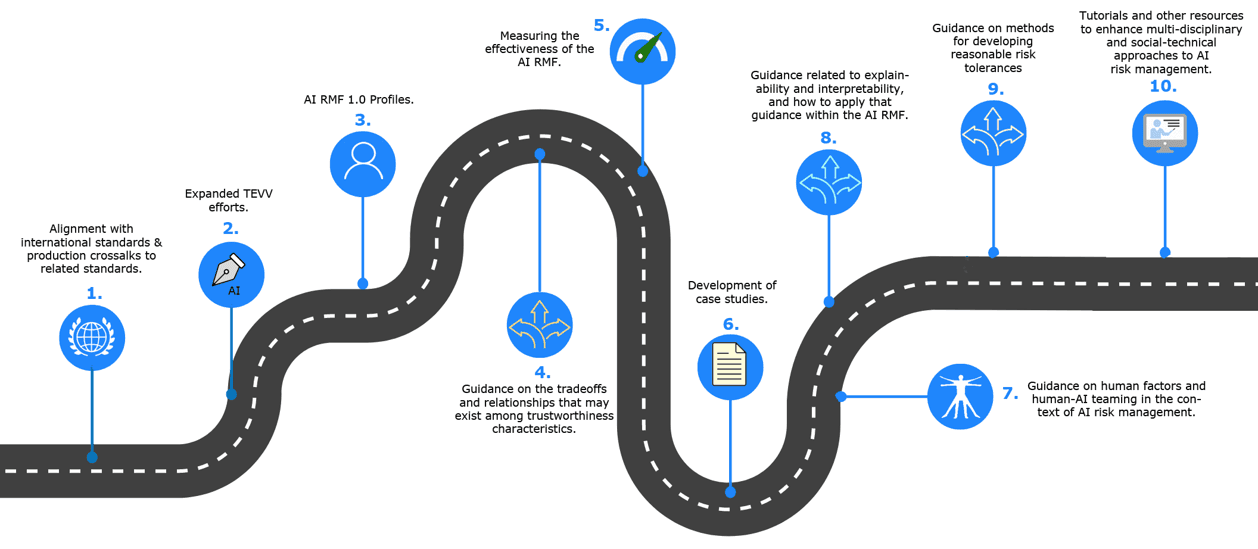
The other 85%? They ship AI without systematic testing. Without governance. Without even basic frameworks for preventing harm.
They treat incidents as "bug fixes" to address after consumers complain.
That's not a strategy. That's a band aid.
What I have been building.
Over the past few years, I have been quietly watching AI build, reading articles, reading books, and testing software's.
Over the past 8 months, it has become very apparent to me that we are going to see a major shift in how AI operates.
Not from an ivory tower, but putting in the work, consuming as much content as I can from as many perspectives as I can.
The people feel it, too.
The challenge is that the teams who genuinely want to for the right thing have to idea where to start.
There is nothing practical for real companies with real constraints:
5-person teams (not 50)
Limited budgets (not Amazon's resources)
Competing priorities (customers, revenue, product roadmap)
Weeks to implement (not years)
So I am trying to build the gap with what is missing and finding ways to make it more accessible.
Practical frameworks that translate NIST AI RMF into steps you can actually take.
With real tools. With specific methodologies. With templates you can use.
I believe in this so much, that I actually reached out to Congressman Bill Foster, the 11th District of Illinois.
I talked to the gatekeeper and she (surprisingly) forwarded my email over to their Senior Legislative Assistant for AI. He responded immediately and asked to set up a time to talk.
Over the next few weeks I will be sharing a bunch of stories from different industries, some current events that are going on right now (like the new US Tech Force initiative) and more.
🎧 GROWTH STRATEGY WITH ALYSSA EVANS Prefer audio? Every email is also a podcast episode. [Subscribe on Apple] [Spotify]
Know someone who needs this? Forward this email - sharing means the world
Stay tuned, stay open-minded, and stay informed.
Customer First
AI can't make you care about people.
Nov 28, 2025
Alyssa Evans
In a world where no one knows what's fake anymore, authenticity is your competitive advantage.
We're living in a weird time. AI-generated everything. Deepfakes.
Your customers are exhausted from trying to figure out what's real and what's not. This is your opportunity. The brands and founders winning right now?
They're the ones talking to their customers like trusted friends, not prospects, not "target audiences," not "leads." Friends.
And here's what the research actually shows about why this works:
The psychology of trust (because data matters)
Behavioral psychology (Fun fact: this is actually what I went to college for) tells us something fascinating about human decision-making: We don't buy from brands we like.
We buy from people we trust. It's built through three psychological principles:
Reciprocity - When you give value first (real insights, honest guidance, actual help), people naturally want to reciprocate.
Consistency - When your actions match your words over time, the brain registers you as "safe." This is why authenticity compounds. One genuine conversation builds trust.
Social proof - But not the fake kind. Real humans want to be around other real humans who "get it." When you show up authentically, you attract your people.
The ones having real conversations? They're building something that lasts.
Here's what that actually looks like.
Real trust-building isn't about being "vulnerable" for engagement or "relatable" for likes.
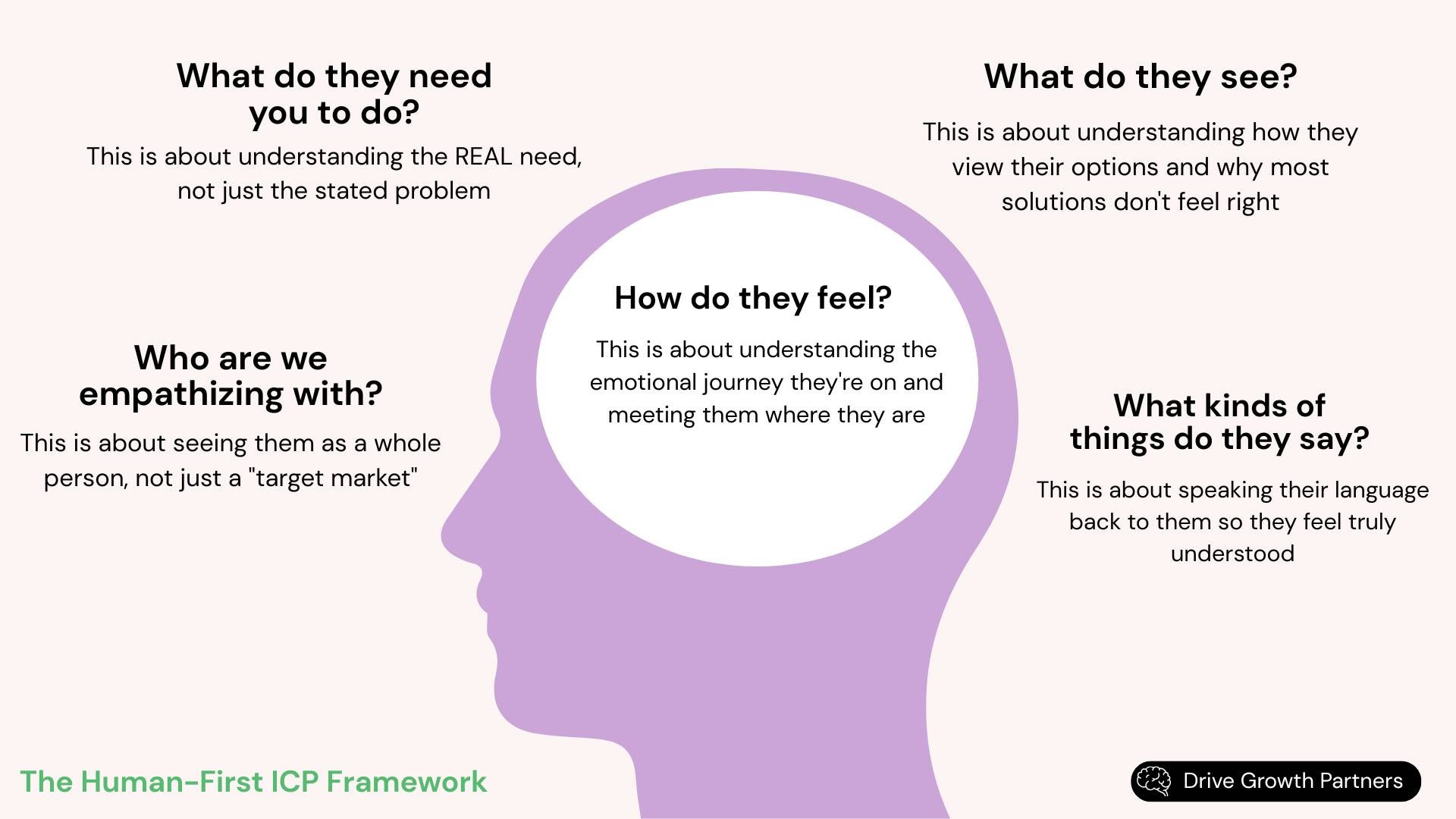
It's about understanding their pain - Not surface-level stuff. The real frustration keeping them up at night. The thing they're almost embarrassed to admit because they think they "should" have figured it out by now.
It's about knowing their psychology - What do they actually care about? What drives their decisions? What are they optimizing for? Is it speed, sustainability, impact, freedom? You can't help people if you don't understand how they think.
It's about being intentional with how you help by empowering them with knowledge. Make them smarter, more informed, more capable. Don't gatekeep. Don't create dependency. Build them up.
The result? Trust. And trust is the only thing that converts. If your marketing feels transactional, scripted, or like it came from a template then guess what? Your audience can tell.Their brains are wired to detect inauthenticity. It's a survival mechanism.
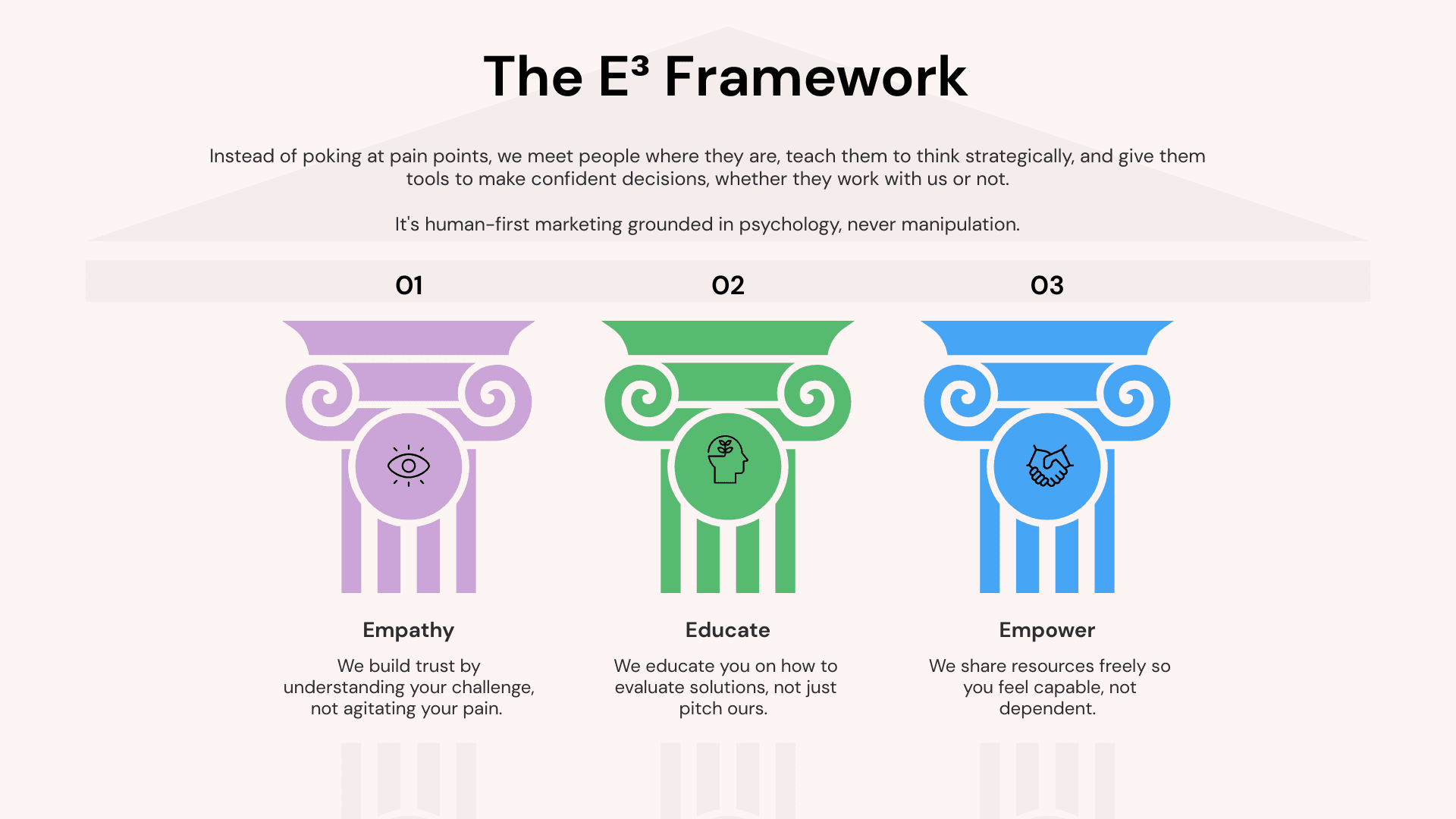
That’s why I built my E3 Framework, the backbone of everything I teach and implement. It’s built on three pillars:

Empathy: Understanding your audience as humans with real challenges, real goals, and real lives and meeting them where they are.

Education: Providing value that actually helps, simplifies, or clarifies.

Empowerment: Giving people the tools, clarity, and confidence to take the next step, whether that’s buying, learning, or growing
Your branding, your messaging, your sales automations, your website, your social media. Literally, all the things.
And my goal is simple: help good people doing good work build marketing directly INTO their systems and operations.
These three elements make your marketing feel better to create and work better for your audience.
And when they’re integrated into your operations, everything aligns: your message, your systems, your growth, your impact.
And I believe that in a world full of fake everything, being genuinely good is the smartest thing you can do.
Next week, I'll talk about how Agentic SEO/AEO is actually rewarding this type of content.
More resources, tools, and support are coming and now you know the foundation they’re built on.
Customer First
Think Like Your Customer: The Marketing Strategy Most Founders Skip
Nov 28, 2025
Alyssa Evans
You know your product inside and out. You can recite features, benefits, and use cases in your sleep. But here's the uncomfortable truth: your customers don't care about any of that—at least not yet.
Most founders make the same mistake. They market from their own perspective, talking about what they've built rather than what their customers actually need. The result? Marketing that feels transactional, messaging that misses the mark, and campaigns that don't convert.
The solution isn't more tactics. It's a fundamental shift in how you approach your marketing: learning to think like your customer.
When you truly understand how your customers think, what keeps them up at night, and how they make decisions, everything changes. Your messaging resonates. Your content connects. Your marketing stops feeling like shouting into the void.
Here's how to make that shift.
Why Most Founders Struggle to Think Like Customers
The Founder's Blind Spot
You're too close to your product. You've spent months (or years) building it, refining it, obsessing over every detail. You know every feature, every integration, every benefit.
But your customers don't have that context. They're not starting where you are—they're starting with a problem, a frustration, or a goal. They don't care about your product until they understand how it solves their specific challenge.
The disconnect: Founders talk about solutions before customers even recognize they have a problem worth solving.
Marketing from the Inside Out
When you market from your perspective, it looks like this:
"Our platform offers advanced analytics and customizable dashboards..."
"We provide end-to-end solutions for enterprise organizations..."
"Built with cutting-edge technology and seamless integrations..."
It's accurate. It's comprehensive. And it completely misses the mark.
Why? Because customers aren't thinking about "advanced analytics." They're thinking: "I need to know which marketing channels are actually driving revenue so I can stop wasting budget on stuff that doesn't work."
See the difference?
The Customer-First Thinking Framework
Here's how to shift from founder-centric thinking to customer-centric marketing:
Step 1: Map the Customer Journey (From Their Perspective)
Stop thinking about your sales funnel. Start thinking about their buying journey.
Ask yourself:
What problem are they experiencing before they even know we exist?
What triggers them to start looking for a solution?
What questions do they have at each stage?
What objections or fears come up during their decision process?
What happens after they buy? What do they need to succeed?
Example from B2B SaaS:
Instead of "awareness → consideration → decision," think:
Problem Recognition: "Our reporting takes 10 hours a week and I still can't tell what's working"
Solution Exploration: "There has to be a better way to track this"
Evaluation: "Which tool will actually save me time without adding complexity?"
Decision: "Can I trust this company? Will implementation be a nightmare?"
Implementation: "I need this to work immediately. I don't have time for a learning curve."
When you map the journey from their perspective, your messaging shifts from "here's what we do" to "here's what you're experiencing, and here's how we make it better."
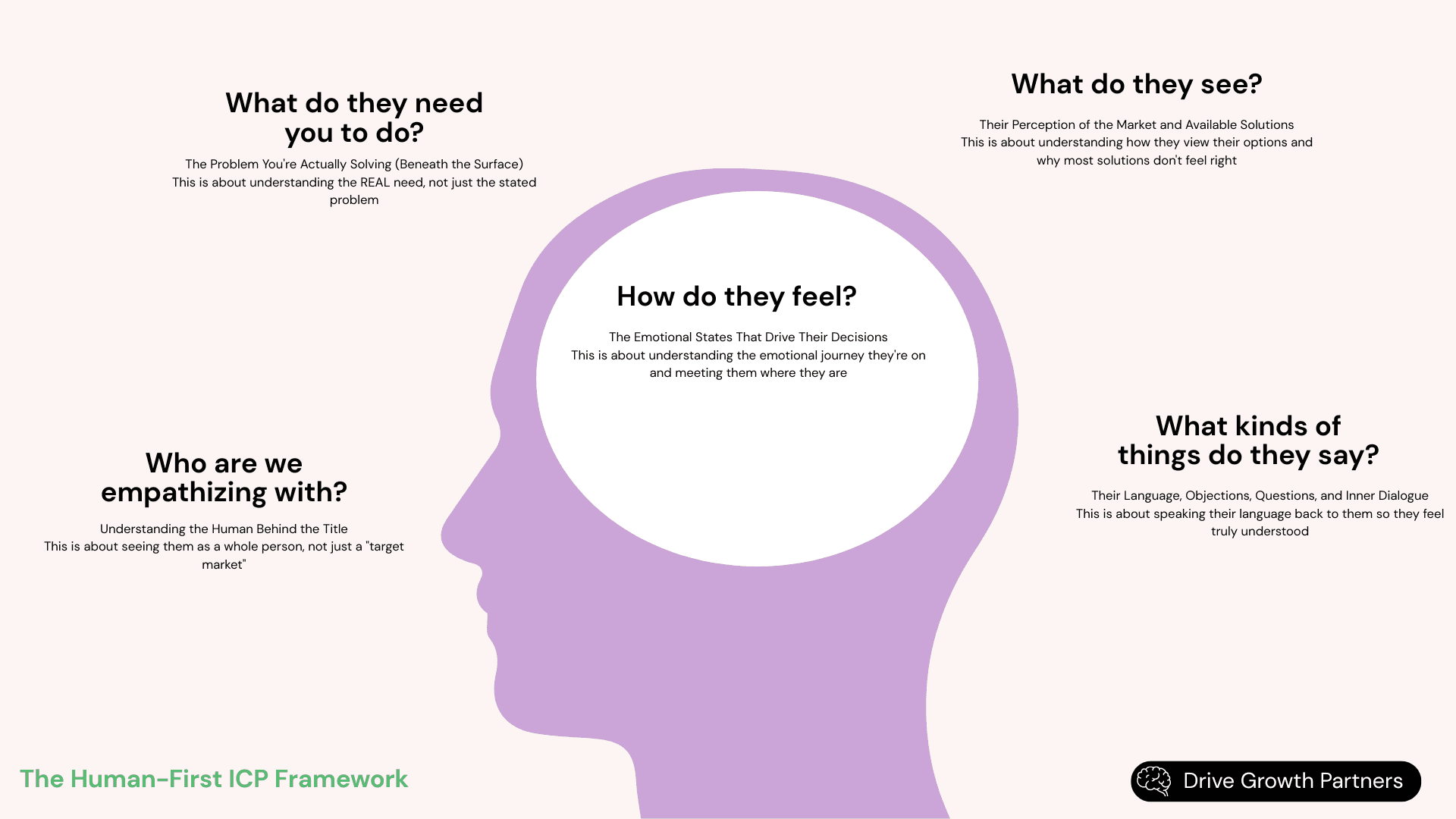
Step 2: Understand Their Psychology (Not Just Their Pain Points)
Most founders stop at identifying pain points. But customer psychology goes deeper.
Ask these questions:
What do they actually want? Not the surface-level answer ("better marketing results") but the underlying desire ("to look competent in front of my CEO," "to stop feeling overwhelmed," "to prove this was worth the investment").
What are they afraid of?
Making the wrong decision
Wasting time and money
Looking foolish to their team
Adding more complexity to their already chaotic systems
Being held accountable for poor results
What do they value?
Time (busy founders don't have hours for implementation)
Simplicity (they're already juggling 50 things)
Proof (they need to see it works before committing)
Control (they want to maintain autonomy)
Results (they need wins, not promises)
Example: If you're selling marketing software to founders, your customer isn't just buying "better analytics." They're buying peace of mind, confidence in their decisions, and the ability to sleep at night knowing their marketing actually works.
When you understand this, your messaging shifts from features to outcomes that matter emotionally.
Step 3: Listen to How They Actually Talk
Your customers use different language than you do. They don't say "optimize our marketing stack" or "increase operational efficiency." They say:
"I'm drowning in data but have no idea what to do with it"
"I feel like I'm just guessing what will work"
"I'm spending hours on marketing that isn't moving the needle"
"I need to know if this is actually worth the time and money"
Where to find their actual language:
Customer calls and demos (record and review them)
Support tickets and emails
Reviews (yours and competitors')
Reddit, LinkedIn comments, industry forums
Sales calls (what questions do they ask repeatedly?)
Use their exact words in your messaging. When customers see their own language reflected back, they think: "This company gets me."
Step 4: Identify Decision-Making Patterns
How do your customers actually make decisions?
Ask:
Do they research exhaustively or make quick decisions?
Do they need social proof or do they trust their gut?
Are they comparing 10 options or choosing the first one that feels right?
Do they involve a team or decide alone?
What would make them say "yes" today vs. "I need to think about it"?
Example from B2B:
Most B2B buyers don't make quick decisions. They need:
Social proof (who else uses this?)
Risk mitigation (what if it doesn't work?)
Clear ROI (how will this impact my business?)
Implementation clarity (how hard is this to set up?)
Peer validation (what do people like me think?)
When you understand their decision-making process, you can address objections before they become blockers.
How to Use Customer Thinking in Your Messaging
Now that you understand how your customers think, here's how to translate that into messaging that connects:
Reframe Your Value Proposition
Instead of: "We provide AI-powered marketing analytics"
Try: "Stop guessing which marketing channels work. Know exactly where to invest your budget for maximum ROI."
See the difference? The first is about you. The second is about their frustration and desired outcome.
Lead with Their Problem, Not Your Solution
Instead of: "Our platform helps you track marketing performance"
Try: "Spending hours pulling reports but still can't tell which campaigns are driving revenue? Here's what's missing."
Start where they are. Acknowledge their struggle. Then position your solution as the bridge to where they want to be.
Use Their Language
Instead of: "Optimize your go-to-market strategy with data-driven insights"
Try: "Figure out what's actually working in your marketing so you can stop wasting money on stuff that doesn't"
The second version sounds like something a real person would say. It's conversational, direct, and focused on their outcome.
Address Hidden Objections
Customers have fears they won't tell you about. Address them proactively:
"Most tools take weeks to implement. Ours works in 15 minutes."
"You won't need a data scientist to understand this."
"Cancel anytime, no contracts, no BS."
"Built by founders who've been exactly where you are."
When you acknowledge their fears without them having to ask, trust builds immediately.
The Customer Empathy Exercise
Here's a practical exercise to help you think like your customer:
Step 1: Become Your Customer for a Day
Literally walk through their experience:
Sign up for your own product as if you're a new customer
Read your website like you've never seen it before
Go through your onboarding like you don't know what you're doing
Try to find answers to common questions
Where do you get confused? Frustrated? Overwhelmed?
Step 2: Interview 5 Customers
Ask open-ended questions:
"What was happening in your business when you started looking for a solution?"
"What almost stopped you from signing up?"
"What convinced you to choose us?"
"What was harder than expected? What was easier?"
"If you were describing us to a colleague, what would you say?"
Record these conversations. Listen for patterns in their language and concerns.
Step 3: Create Customer Personas (But Make Them Real)
Don't create fake personas based on demographics. Create real profiles based on psychology:
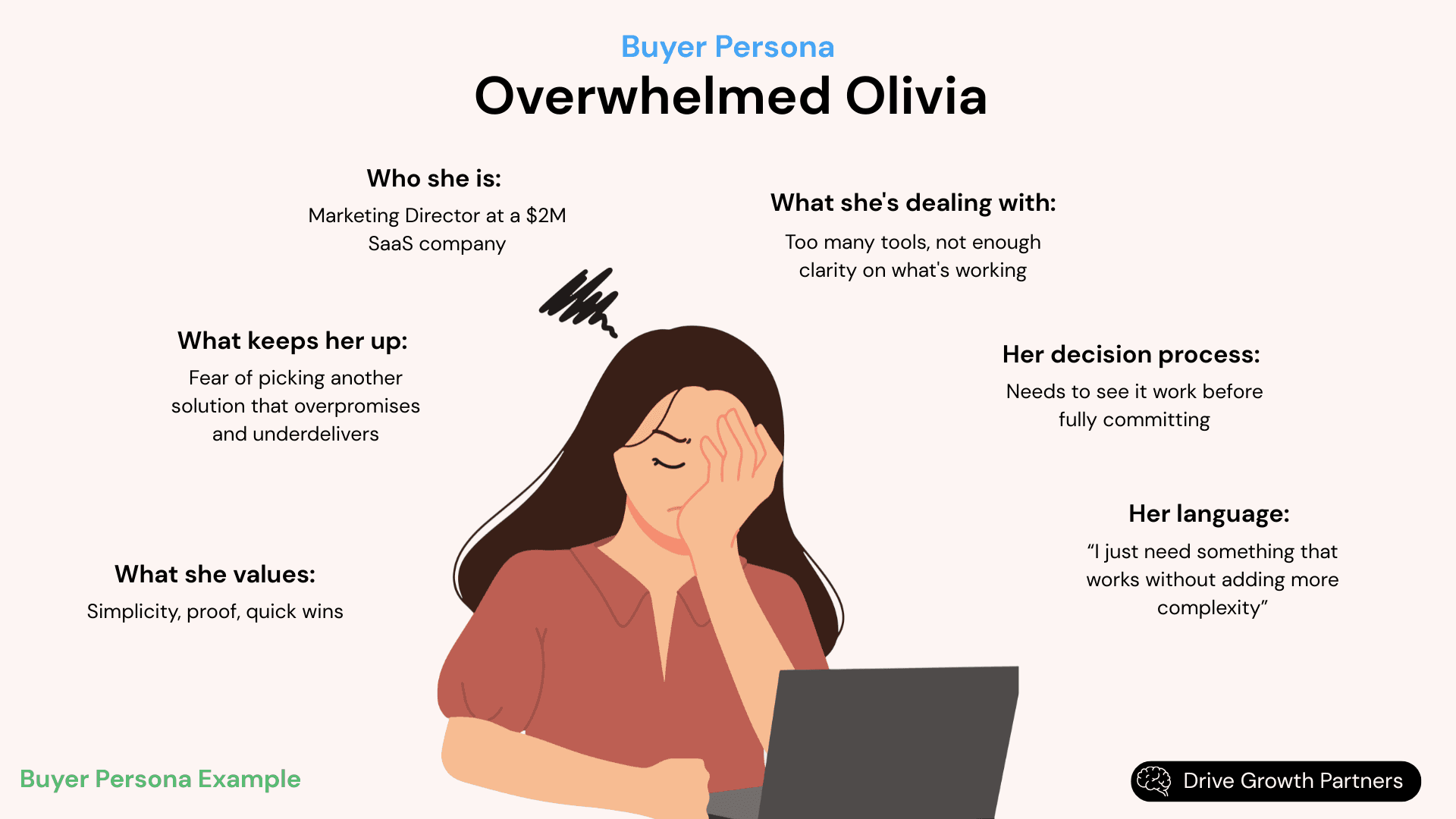
Example: "Overwhelmed Olivia"
Who she is: Marketing Director at a $2M SaaS company
What she's dealing with: Too many tools, not enough clarity on what's working
What keeps her up: Fear of recommending the wrong strategy to her CEO
What she values: Simplicity, proof, quick wins
Her decision process: Needs to see it work before fully committing
Her language: "I just need something that works without adding more complexity"
Now write your messaging for Olivia. How would you talk to her? What would resonate?
Common Mistakes When Trying to Think Like Customers
Mistake #1: Assuming You Know Without Asking
You think you know what customers want, but you're projecting your own assumptions. Always validate with real conversations.
Mistake #2: Focusing Only on Pain Points
Pain points are important, but they're not the whole picture. Understand aspirations, fears, values, and decision-making patterns too.
Mistake #3: Using Customer Language Superficially
Just sprinkling in a few casual phrases doesn't cut it. Your entire messaging framework should be built from their perspective.
Mistake #4: Forgetting Customers Change
What mattered to customers six months ago might not matter now. Keep listening. Keep evolving.
What Customer-Centric Marketing Looks Like in Practice
Before Customer-First Thinking:
Website headline: "The All-in-One Marketing Platform for Growing Businesses"
Email subject: "Introducing Our New Analytics Dashboard"
Social post: "Check out our latest feature release!"
After Customer-First Thinking:
Website headline: "Finally Know What's Actually Working in Your Marketing (Without Spending Hours in Spreadsheets)"
Email subject: "Stop guessing which campaigns drive revenue"
Social post: "You're spending 10 hours a week on reports that don't tell you what to do next. Here's what's missing."
See how the second set speaks directly to customer frustrations and desired outcomes? That's thinking like a customer.
The ROI of Customer-First Marketing
When you truly think like your customers:
Your messaging resonates because it addresses real frustrations, not imagined ones
Your conversion rates improve because you're speaking their language
Your content gets shared because it feels like you "get it"
Your sales cycles shorten because you've addressed objections proactively
Your customer retention improves because you're solving problems that actually matter
This isn't about manipulation or clever copywriting tricks. It's about genuine empathy—understanding your customers so well that your marketing feels like a conversation with a trusted advisor who truly gets what they're going through.
Your Next Steps
Here's what to do this week:
Interview 2-3 customers (current or past). Ask about their journey, not your product.
Audit your homepage through a customer's eyes. Where do you talk about yourself vs. their needs?
Rewrite one key piece of messaging using customer language and perspective. Test it.
Set up a system to capture customer language (record calls, save emails, bookmark reviews).
Create one customer persona based on real conversations, not assumptions.
The best marketing doesn't feel like marketing. It feels like someone finally understands what you're going through—and has a real solution.
That's what happens when you learn to think like your customer.
Ready to Build Customer-Centric Marketing?
If you're tired of marketing that feels like guesswork and ready to build messaging that actually connects, let's talk.
At Drive Growth Partners, we use an audit-first approach to understand your customers' real needs, psychology, and decision-making patterns—then build marketing strategies that align with how they actually think.
Book a 30-minute strategy call and we'll help you shift from founder-centric to customer-centric marketing.
Or download our Customer Empathy Worksheet to start mapping your customer's journey from their perspective.